
• Skip to primary navigation
  • Skip to main content
  • Skip to primary sidebar

GRASAC logo

  • About
    • GRASAC’s Database
    • Where We Have Researched
    • Funding
    • About This Website
  • People
    • GRASAC’s Steering Commitee
    • Research Assistants
    • Profile Articles
  • Exhibits
  • Research
    • Research in Action
    • Publications
  • Learn
    • Great Lakes Treaty Timeline
    • Great Lakes Communities Map
    • Indian Residential Schools
      • Access Support
      • Provide Support
  • News
    • GRASAC News
    • Newsletter
      • Newsletter Stories
  • GKS
  • Contact

Reparative Description in the GKS

April 1, 2023 by chass_wp-admin

From Kara Annett and Natasha Fares 
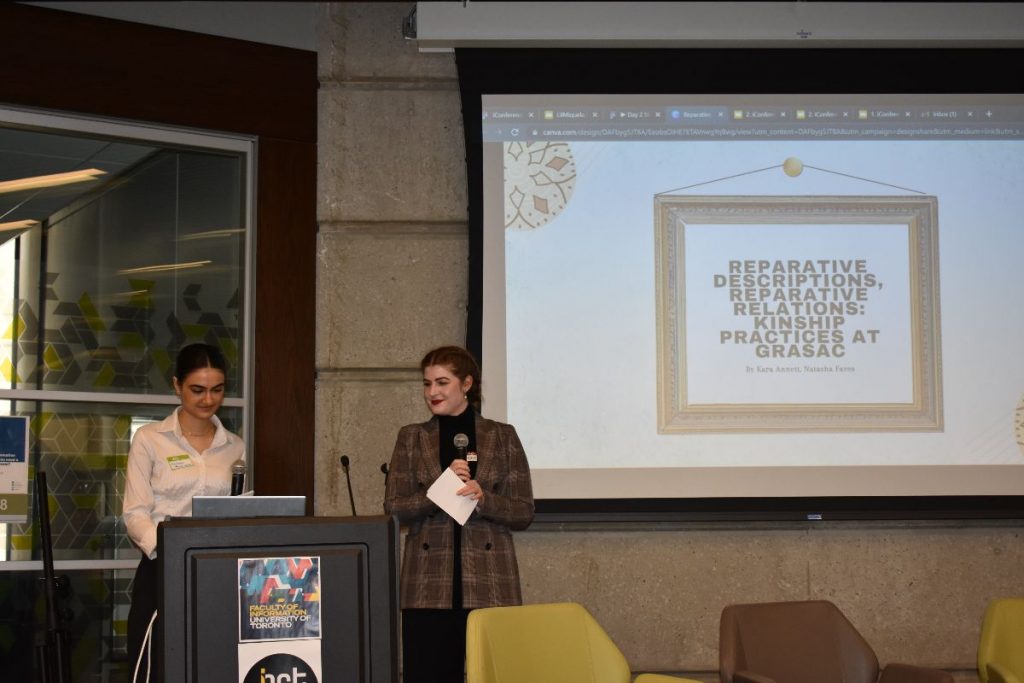
Natasha Fares and Kara Annett presenting at the 2023 iConference. Photo Courtesy of Ruth Bryce.

On March 11th Kara Annett and Natasha Fares, two of GRASAC’s research assistants, presented at the University of Toronto’s iConference. It was the first time the conference had been in person since the pandemic, and this year’s theme was information activism. This gave them the perfect opportunity to talk about the work GRASAC has been doing, explain the GKS, show some of the ancestors in our system, and how we use kinship practices within our collections.

Using items from the GKS and the Birdstones from the virtual tour with the Royal Ontario Museum, Kara and Natasha demonstrated how we’ve been using reparative descriptions to help ancestors find their way back to their communities as well as discussed the strengths of using this strategy within archives and museum collections.

In addition to presenting, Kara and Natasha also took part in a Q and A with other panelists and talked about the importance of admitting that we don’t know everything and how it can lead to opportunities for collaboration and education. Returning agency to ancestors and helping them find their way back home by making them more accessible to their communities through using their language and providing descriptions that make it easier to search is an important practice that other institutions can learn from.

Filed Under: Newsletter Stories

Previous Post: « Mnaajtood ge Mnaadendaan: Miigwewinan Michi Saagiig Kwewag Miinegoowin Gimaans Zhaganaash Aki 1860 / To Honour and Respect: Gifts from the Michi Saagiig Women to the Prince of Wales, 1860
Next Post: GRASAC Co-Director Visiting Scholar at University of Michigan »

Primary Sidebar

Recent Posts

  • Honouring Professor John Borrows: GRASAC Member Recognized for Human Rights Leadership
  • Research in Progress: GRASAC Members Lead Workshop Revisiting 1858 Indigenous Diplomatic Council
  • Passing the Torch for GRASAC’s Communications
  • GRASAC Connects with the Baraga Collection at the Slovene Ethnographic Museum in Ljubljana, Slovenia
  • Wampum, Partnership, and the Bank of Canada Museum