
From Elysia Poon, School for Advanced Research
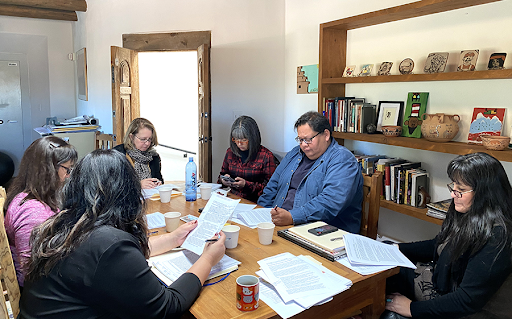
On July 25, the School for Advanced Research (SAR) and the American Alliance of Museums (AAM) announced the release of the Standards for Museums with Native American Collections (SMNAC), a comprehensive document to help museums clarify and strengthen their roles as stewards, and improve the museum field as a whole with regard to Native American peoples, communities, and cultural items.
SMNAC grew out of a presentation made by Dr. Deana Dartt, a Coastal Band Chumash museum scholar, curator, and principal at Live Oak Consulting, at the Association of Tribal Archives, Libraries, and Museums (ATALM) conference in 2017. Her presentation pointed out the need for change and resulted in the development of these standards by a core group of individuals in collaboration with SAR, in consultation with AAM, and with input from 70 museum professionals working with Native collections.
“Shifts within the museum field need to happen at multiple levels,” said Elysia Poon, director of the Indian Arts Research Center (IARC) at SAR. “This document provides a pathway for how these changes might occur. It has been a privilege to have the opportunity to guide the development of this document with Deana Dartt, and work with so many passionate individuals who are committed to making museums a better place.”
Adds Dr. Dartt, “Historically it has been daunting to for even those who earnestly want to be collaborative with and inclusive of Indigenous perspectives—this document is a game-changer. The SMNAC can help all institutions be better allies to the people of the land, no matter their size or capacity.”
“The SMNAC is the result of years of work from experts who are guiding a field-wide effort to take the Native American Graves Protection and Repatriation Act (NAGPRA) several steps further,” said Brooke Leonard, Interim CEO at AAM. “It provides a new level of support for institutions to become community partners, further enabling them to connect collections with descendent communities for more meaningful, relevant and culturally sensitive interpretation and documentation.”
The SMNAC will serve to guide all aspects of work within museums holding Native collections, making recommendations grouped around the seven function areas as identified by AAM’s Core Standards: Mission and Planning, Collections Stewardship, Facilities and Risk Management, Education and Interpretation, Leadership and Organizational Structure, Financial Stability, Public Trust and Accountability. The document has been added to AAM’s Framework for Museum Excellence and will be used as guidance to inform Museum Assessment Program and Accreditation reviews for museums with Native American collections.
The SMNAC provides case studies from several institutions that exemplify meaningful collaboration and inclusion and a list of resources for further exploration and research.
The specific goals of SMNAC are to:
- Provide actionable recommendations for Native inclusion
- Motivate museums toward collaboration and partnership with Native communities
- Emphasize the responsibility and accountability inherent in the stewardship of Native collections and teaching cultural content
- Recognize the colonial legacy of museums and provide opportunities to educate about this history and its ongoing
- impact on Native people
- Address the need for cultural sensitivity and competency
- Provide support for Native American museum professionals, staff, board members, and volunteers
- Inform museums about the unique status of tribal governments and sovereignty
- Develop methodologies for working with Native communities
The development of the SMNAC is generously supported by the Anne Ray Foundation with additional support by the Smithsonian’s National Museum of the American Indian.